Clown Loach Care Guide
Chromobotia macracanthus · Moderate care · 75 gallon minimum
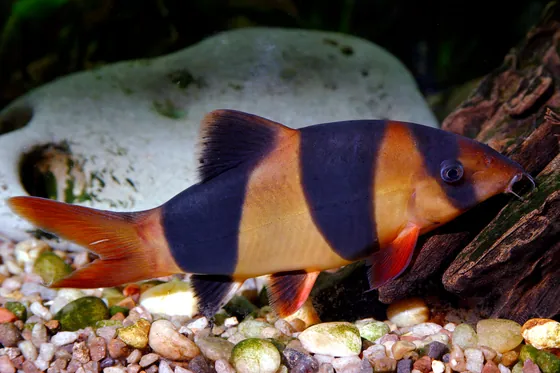
A playful orange-and-black loach that gets big and lives decades; needs a large tank and a real group.
Check your stocking with the stocking calculator →
How big does a clown loach get?
A clown loach (Chromobotia macracanthus) reaches about 12.0 inches as an adult. Plan tank size and tank mates around the adult size, not the small fish you buy at the store.
Tank size & setup
Give a clown loach a minimum of 75 gallons, with water at 75–86°F and a pH of 6–7.5. Keep them in groups of at least 5 — they are shoaling fish and become stressed and washed-out alone. As a moderate-care, omnivore species, a stable, cycled tank with the right diet keeps them healthiest.
Good tank mates
Pair a clown loach with peaceful species that share its temperature and pH range. Compatible options include:
- Neon Tetra — 1.5", 10g min
- Guppy — 2.0", 10g min
- Molly — 4.0", 20g min
- Platy — 2.5", 10g min
- Zebra Danio — 2.0", 10g min
About the clown loach
The clown loach, or tiger botia, is a tropical freshwater fish belonging to the botiid loach family. It is the sole member of the genus Chromobotia. It originates in inland waters in Indonesia on the islands of Sumatra and Borneo. The fish is called ulanguli by the locals in Sentarum, West Borneo. It is a popular fish in the freshwater aquarium trade and is sold worldwide.
Recommended gear for clown loachs
As an Amazon Associate we earn from qualifying purchases.