Discus Care Guide
Symphysodon spp. · Advanced care · 55 gallon minimum
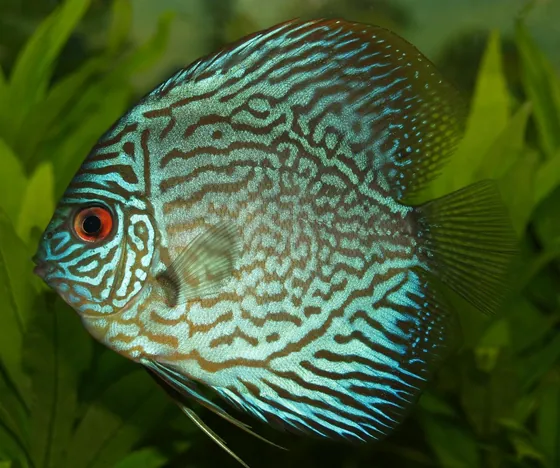
The 'king of the aquarium' — a disc-shaped showpiece demanding warm, pristine, soft water and groups.
Check your stocking with the stocking calculator →
How big does a discus get?
A discus (Symphysodon spp.) reaches about 8.0 inches as an adult. Plan tank size and tank mates around the adult size, not the small fish you buy at the store.
Tank size & setup
Give a discus a minimum of 55 gallons, with water at 82–88°F and a pH of 6–7. Keep them in groups of at least 5 — they are shoaling fish and become stressed and washed-out alone. As a advanced-care, carnivore species, a stable, cycled tank with the right diet keeps them healthiest.
Good tank mates
Pair a discus with peaceful species that share its temperature and pH range. Compatible options include:
- Guppy — 2.0", 10g min
- Harlequin Rasbora — 2.0", 10g min
- Dwarf Gourami — 3.5", 10g min
- Pearl Gourami — 4.5", 30g min
- Kuhli Loach — 4.0", 20g min
About the discus
Symphysodon is a genus of cichlids native to the Amazon river basin in Brazil. Due to their distinctive shape, calm behavior, many bright colors and patterns, and dedicated parenting techniques, discus are popular as freshwater aquarium fish, and their aquaculture in several countries in Asia is a major industry. They are sometimes referred to as pompadour fish. The discus fish has attracted a cult following of collectors and has created a multimillion dollar international industry complete with shows, competitions, and reputable online breeders.
Recommended gear for discuss
As an Amazon Associate we earn from qualifying purchases.