Electric Yellow Lab Care Guide
Labidochromis caeruleus · Moderate care · 40 gallon minimum
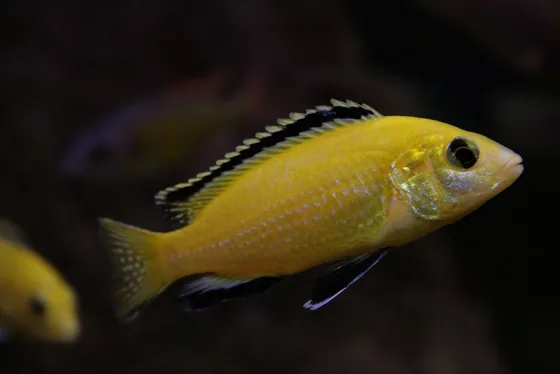
A brilliant yellow Mbuna cichlid for hard, alkaline African setups; among the most peaceful Lake Malawi fish.
Check your stocking with the stocking calculator →
How big does a electric yellow lab get?
A electric yellow lab (Labidochromis caeruleus) reaches about 4.0 inches as an adult. Plan tank size and tank mates around the adult size, not the small fish you buy at the store.
Tank size & setup
Give a electric yellow lab a minimum of 40 gallons, with water at 74–82°F and a pH of 7.6–8.6. Keep them in groups of at least 4 — they are shoaling fish and become stressed and washed-out alone. As a moderate-care, omnivore species, a stable, cycled tank with the right diet keeps them healthiest.
Good tank mates
Pair a electric yellow lab with peaceful species that share its temperature and pH range. Compatible options include:
- Guppy — 2.0", 10g min
- Molly — 4.0", 20g min
- Platy — 2.5", 10g min
- Corydoras Catfish — 2.5", 20g min
- Goldfish (Fancy) — 8.0", 20g min
About the electric yellow lab
Labidochromis caeruleus is a species of cichlid endemic to the central western coastal region of Lake Malawi in East Africa. It has many common names, such as lemon yellow lab, the blue streak hap, the electric yellow or yellow prince, depending on the colour morph. The naturally occurring yellow-coloured variant from Lion's Cove is one of the most popular cichlids amongst aquarium hobbyists.
Recommended gear for electric yellow labs
As an Amazon Associate we earn from qualifying purchases.