Pea Puffer Care Guide
Carinotetraodon travancoricus · Moderate care · 5 gallon minimum
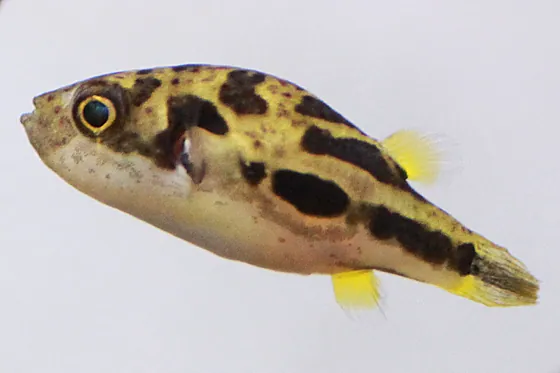
The tiny freshwater dwarf puffer — intelligent and adorable, but nippy; usually a species-only nano tank.
Check your stocking with the stocking calculator →
How big does a pea puffer get?
A pea puffer (Carinotetraodon travancoricus) reaches about 1.0 inches as an adult. Plan tank size and tank mates around the adult size, not the small fish you buy at the store.
Tank size & setup
Give a pea puffer a minimum of 5 gallons, with water at 74–82°F and a pH of 6.5–7.5. As a moderate-care, carnivore species, a stable, cycled tank with the right diet keeps them healthiest.
Good tank mates
Pair a pea puffer with peaceful species that share its temperature and pH range. Compatible options include:
- Neon Tetra — 1.5", 10g min
- Guppy — 2.0", 10g min
- Molly — 4.0", 20g min
- Platy — 2.5", 10g min
- Zebra Danio — 2.0", 10g min
About the pea puffer
The dwarf pufferfish, also known as the Malabar pufferfish, pygmy pufferfish, or pea pufferfish, is a small freshwater pufferfish endemic to Kerala and southern Karnataka in Southwest India. They are popular in aquaria for their bright colours and small size. At a maximum total length of 3.5 cm, dwarf pufferfish are one of the smallest pufferfish in the world. They closely resemble the related Carinotetraodon imitator, and the two can be difficult to distinguish. C. imitator was not recognised as a different species until 1999.
Recommended gear for pea puffers
As an Amazon Associate we earn from qualifying purchases.